About us
Suncity Dental
Advanced Dentistry for a Brighter Smile
Technologies
Modern-day Caring Technologies for Your Dental Health
Laser
Diode lasers are a cutting-edge technology in periodontics, providing highly effective, minimally invasive solutions for a variety of procedures. These lasers are commonly used in gingivectomy and gingivoplasty for the removal or reshaping of gum tissue, offering precise control with minimal discomfort and reduced bleeding compared to traditional methods. In the treatment of periodontal disease, diode lasers assist in pocket disinfection, effectively targeting bacteria in deep periodontal pockets to promote faster healing and improve overall treatment outcomes. The laser’s ability to selectively remove diseased tissue while preserving healthy structures makes it an essential tool in Laser-Assisted New Attachment Procedure (LANAP), a modern approach to treating periodontal disease.
Moreover, diode lasers are invaluable in crown lengthening procedures, allowing for the precise removal of excess gum tissue to expose more of the tooth surface for restorative work. They are also highly effective in frenectomy surgeries, where excess or abnormal frenulum tissue is removed with minimal discomfort and reduced recovery times. Diode lasers are additionally used for oral lesion treatment, such as removing benign growths or treating ulcers, promoting faster tissue healing and reducing the likelihood of post-operative infection.
The advantages of diode lasers extend beyond surgical applications: they help improve patient comfort, reduce post-operative swelling, and facilitate faster recovery. Additionally, their ability to target specific tissue types with minimal damage to surrounding areas enhances the overall precision of periodontal treatments. While the initial cost of diode laser equipment can be high, the long-term benefits in terms of patient satisfaction and treatment efficacy make them a valuable addition to any periodontal practice. Proper training is essential to maximize their potential, ensuring both optimal results and patient safety.
Dental IMPLANT armamentarium
An implant physiodispenser is a specialized device used in dental implant surgery to control the torque and force during implant placement, ensuring precise, accurate, and safe insertion of implants. By regulating torque, it helps prevent bone or implant damage, minimizes trauma to surrounding tissues, and reduces postoperative pain and swelling. The device improves surgical outcomes by providing consistent placement with optimal speed and force, contributing to enhanced implant stability and long-term success. Versatile and user-friendly, it is compatible with various implant systems and is essential for improving the precision and overall success of dental implant procedures.
Intra Oral Scanner
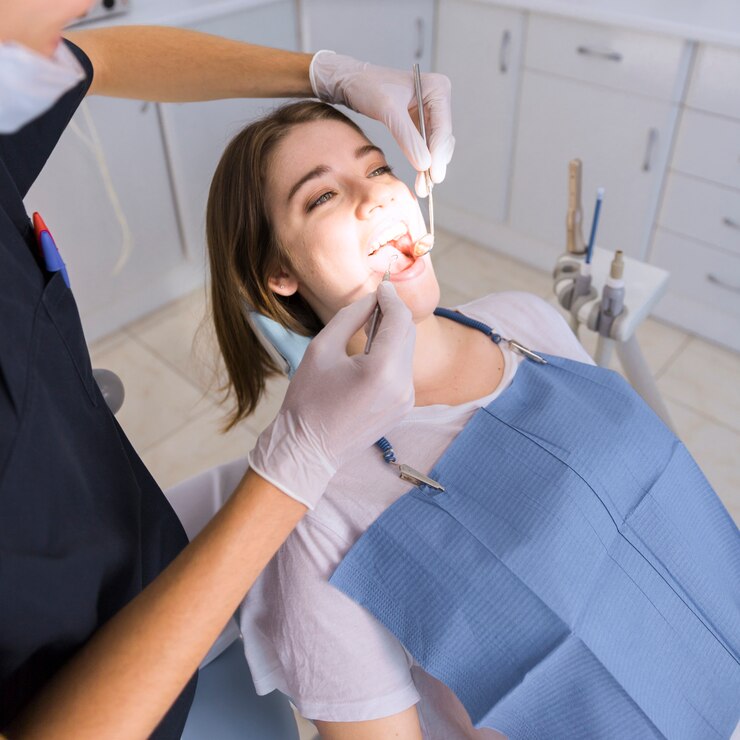
An intraoral scanner is a digital device used in dentistry to capture precise 3D images of a patient’s teeth and oral structures. It eliminates the need for traditional molds or impressions, providing a more comfortable, efficient, and accurate alternative. The scanner uses advanced technology, such as optical or laser scanning, to capture detailed images of the mouth, which are then converted into digital models. These digital impressions are used for a variety of applications, including designing crowns, bridges, implants, aligners, and dentures, as well as for orthodontic assessments. Intraoral scanners improve treatment planning, reduce patient discomfort, and accelerate the overall workflow, enhancing both the patient experience and clinical outcomes.
Intra Oral Camera
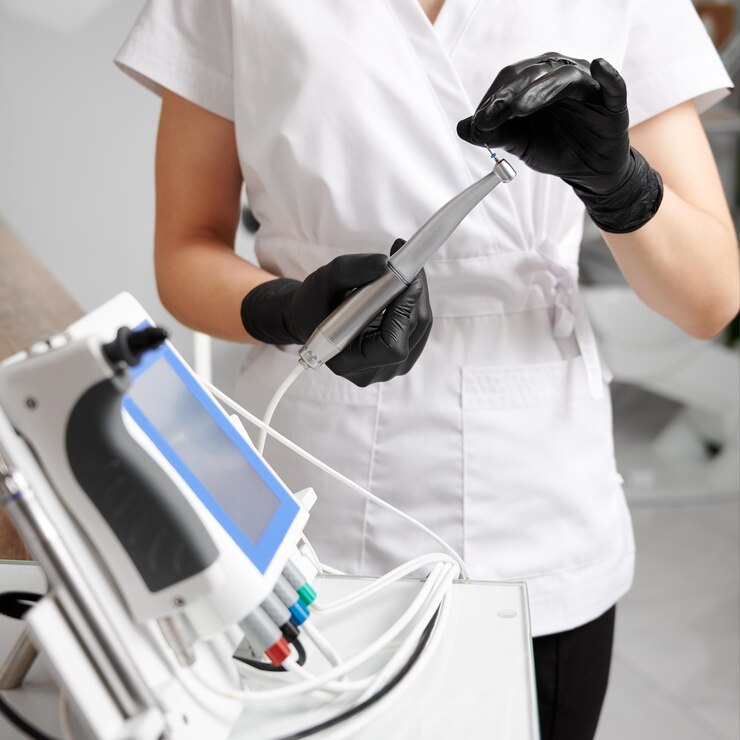
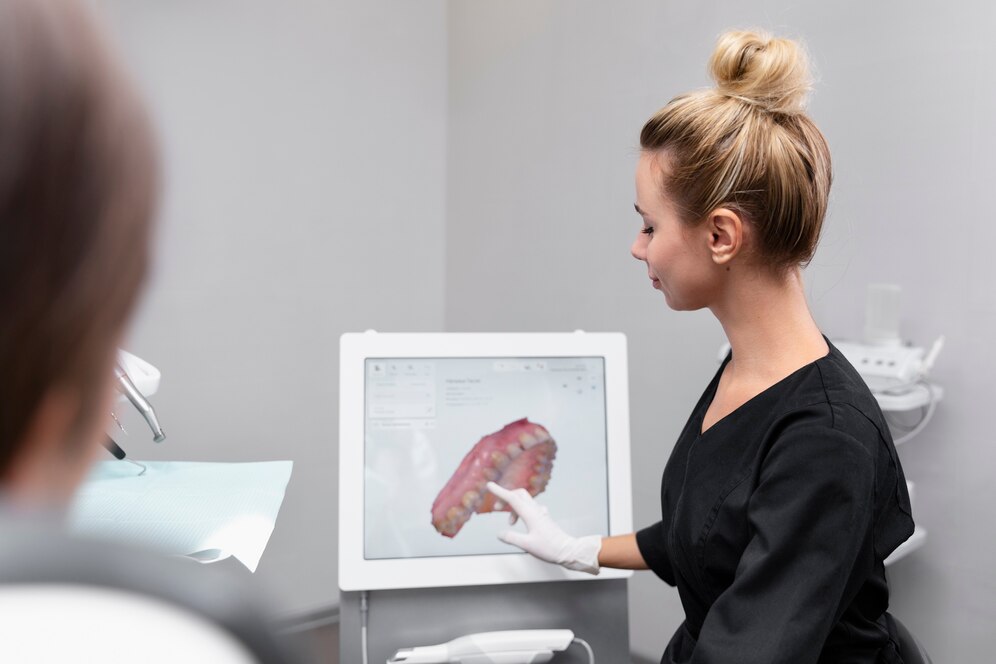
An intraoral camera is a small, handheld device used in dentistry to capture detailed, high-quality images of a patient’s mouth. The camera, which is typically placed inside the mouth, allows the dentist to view and record clear visuals of teeth, gums, and other oral structures. These images are displayed on a screen in real-time, aiding in diagnosis, treatment planning, and patient education. Intraoral cameras enhance communication between the dentist and patient by providing a visual representation of oral health, helping patients better understand their conditions and recommended treatments. Additionally, these cameras improve documentation and enable more accurate record-keeping for dental procedures.
Sterilization Unit
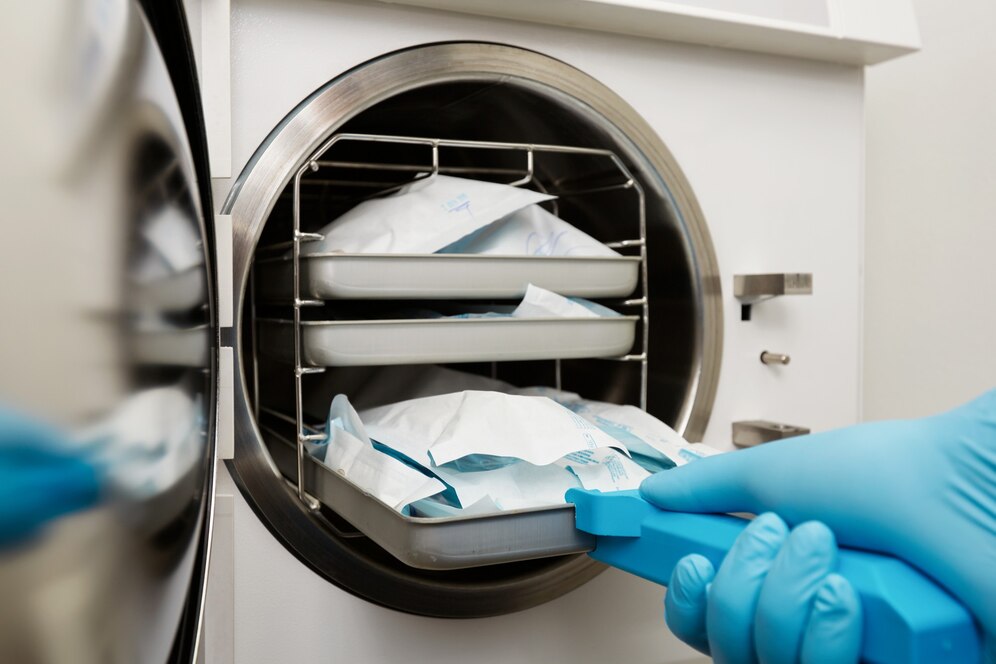
An autoclave is a crucial sterilization unit in dental practices, designed to eliminate harmful microorganisms from dental instruments through high-pressure steam. The autoclave works by sealing instruments in a chamber, where steam is heated to temperatures typically around 121–134°C (250–273°F). The high pressure and temperature ensure that bacteria, viruses, fungi, and spores are killed, making the instruments safe for reuse. Autoclaves come in various sizes and configurations, such as gravity displacement and vacuum types, with the latter offering more efficient sterilization by removing air from the chamber before the steam cycle. Autoclaving is essential for maintaining stringent infection control standards in dental clinics and meeting health and safety regulations.